
Lithium vs. Wet-Cell Motorcycle Batteries: Is the Upgrade Worth It?
The lighter battery costs more. Whether it’s worth buying depends on your motorcycle—and how you use it.
A motorcycle battery usually gets your attention at the worst possible time. You hit the starter, hear something disappointing, and suddenly you’re shopping.
Then comes the question: replace what you had, or spend more on lithium?
Before you buy, sort out one thing that makes this comparison confusing: wet-cell, AGM and lithium aren’t three names for the same thing.
First, know what’s under the seat
A conventional wet-cell battery is a lead-acid battery with liquid electrolyte. It normally needs periodic electrolyte checks and must stay upright. Follow its instructions for adding distilled water when required.
An AGM battery is also lead-acid, but its electrolyte is held in glass mats. It doesn’t require routine water top-ups once correctly activated and sealed. Don’t pry open a sealed AGM battery to add water.
A lithium motorcycle starting battery, such as the NOCO models below, uses lithium iron phosphate, or LiFePO4. It needs compatible charging equipment and a suitable motorcycle charging system.
So if you’re replacing an AGM battery, the real buying decision is often AGM versus lithium, rather than old-fashioned wet-cell versus lithium.
| What matters | Conventional wet-cell | AGM lead-acid | Lithium iron phosphate |
|---|---|---|---|
| Routine water checks | Typically required | No routine water top-ups after activation and sealing | No water top-ups |
| Weight | Heavier than a comparable lithium option | Heavier than a comparable lithium option | Usually substantially lighter; compare actual models |
| Purchase price | Often the budget option where specified | Lower than the lithium examples below | Higher upfront cost in these examples |
| Charging | Match voltage and battery requirements | Use an AGM-compatible profile | Use the battery maker’s approved lithium profile |
| Fitment | Correct size, terminals and upright mounting | Correct size, terminals and approved orientation | Correct application, mounting, terminals and charging-system compatibility |
Where lithium earns its appeal
Weight is the obvious attraction. Taking pounds out of the battery compartment can matter to a rider who values a lighter machine or is already making other weight-saving changes.
Lithium also avoids conventional battery electrolyte maintenance. But AGM already eliminates routine water top-ups, so that benefit alone doesn’t settle an AGM-versus-lithium purchase.
My buying advice: decide what you expect the upgrade to accomplish. If weight reduction matters to you, compare the actual battery weights and the total conversion cost. If your main goal is simply dependable starting at a reasonable price, include a correctly specified AGM battery in the comparison.
Cold mornings deserve a closer look
Lithium batteries can behave differently in cold weather. NOCO’s instructions note that its NLP batteries may initially deliver power more slowly in extremely cold conditions.
Charging limits also vary by product. Don’t borrow another brand’s temperature rule and assume it applies to your battery. Read the exact model’s charging and storage instructions, especially if your motorcycle winters in an unheated garage.
That’s one reason there isn’t a universal winner for every rider in every climate.
Three Walmart options to compare
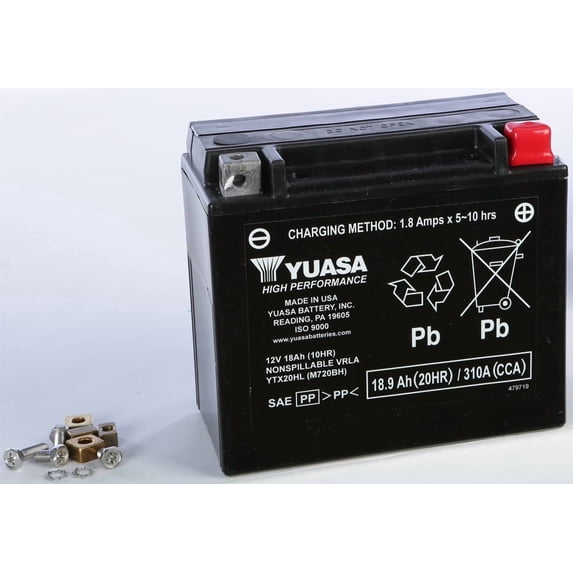
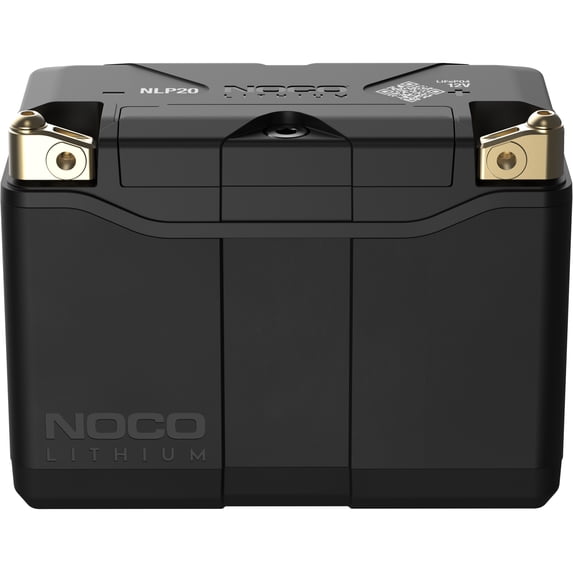
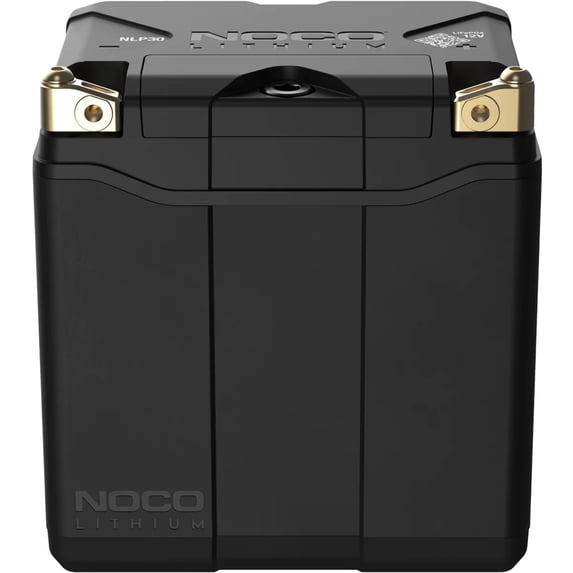
These examples show the price difference between an AGM replacement and lithium alternatives. They are not three interchangeable batteries, and we haven’t verified them for your individual motorcycle.
| Battery | Type | Price when checked | Buying consideration |
|---|---|---|---|
| Yuasa YTX20HL, factory activated — YUAM720BH | AGM lead-acid | $107.03 | An option where the manufacturer’s application guide specifies this battery. Factory activated; verify the exact listing and model. |
| NOCO NLP20 | LiFePO4 | $179.95 | Check NOCO’s fitment guidance, required spacers and your motorcycle’s charging-system compatibility. |
| NOCO NLP30 | LiFePO4 | $199.95 | A different model with different fitment requirements. A higher model number doesn’t make it the right replacement. |
The Yuasa shown here is AGM, not a conventional refillable wet-cell battery. If your motorcycle specifies a conventional battery, use its application guide to find the correct replacement before considering a different type.
Also, don’t compare advertised lithium “starting amps” directly with another battery’s cold-cranking-amp rating unless the manufacturers specify equivalent test methods. Check actual amp-hour capacity and the application requirements as well—especially if accessories draw power while the engine is off.
Buying lithium? Budget for the charger check.
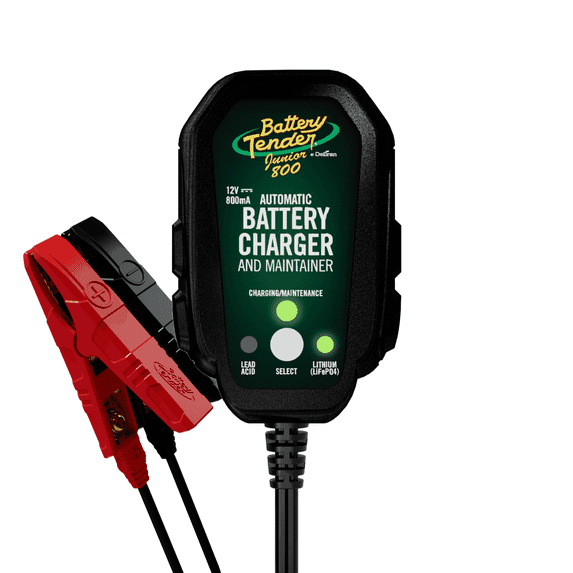
This is where an upgrade can catch you out. The old charger’s connector may still fit, but the charging profile may no longer be appropriate.
NOCO specifies a compatible lithium charger for its NLP batteries and recommends its GENIUS chargers’ lithium mode. Before reusing another charger, check the battery’s exact requirements against that charger’s manual.
Read our companion guide: Don’t Buy a Battery Tender Until You Check This →
That story covers a switchable Battery Tender Junior available at Walmart, plus why certain repair modes require extra care. A “lithium” setting still needs to match your particular battery’s specifications.
What I’d check before spending the money
Start with the motorcycle’s exact year, make and model, then verify the battery manufacturer’s application guidance. Check dimensions, terminal position, cable reach, mounting security and any required spacers. For a lithium conversion, confirm electrical compatibility too.
If the current battery keeps going flat, have it tested and investigate charging faults or electrical drains. A more expensive replacement won’t cure a problem elsewhere on the bike.
For riders happy with their existing setup, an approved AGM replacement may be the straightforward purchase. For riders who value the weight saving and have confirmed compatibility, lithium can be worth considering.
Buy for the motorcycle you own and the riding you do. The best battery is the one that meets those needs—not the one with the biggest number on the box.
Prices checked November 4, 2026, in Walmart Creator. Prices, sellers, shipping and availability can change. This is a researched buying guide, not a hands-on comparison test.
Affiliate disclosure: Biker Nation is a Walmart Creator and may earn a commission when you buy through links in this article, at no extra cost to you.


